




All Mocha Apps

 Business OperationsManage day-to-day operations
 Property AccountingComplete property accounting
 Lease ManagementManage leases efficiently
- Pricing
Business OperationsManage day-to-day operationsProperty AccountingComplete property accountingLease ManagementManage leases efficiently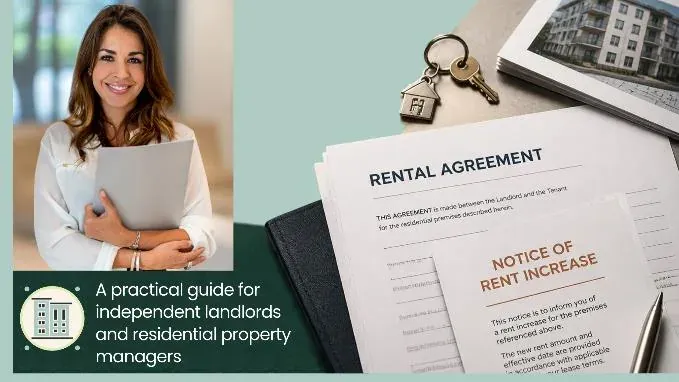
Most states require 30 days of written notice to raise rent on a month-to-month tenancy, but the range runs from no set period to 90 days, and some places also cap how much rent can rise. The safe approach is to check your state and your city before you set a date, because an increase served with too little notice can be invalid.
This guide is for independent landlords and residential property managers. It explains why rent increase laws differ, shows how several states handle it, and lists what a clean notice should contain. It is general information, not legal advice, and laws change often.
Free Downloads: Rent Increase Notice Calculator (Excel) and Rent Increase Notice Letter Template (Word). Enter the current and proposed rent and your jurisdiction, and the calculator returns the percent increase, the minimum notice, the earliest effective date and whether the increase is within the cap. The letter template has the wording and a delivery checklist. Download the Rent Increase Notice Calculator and the Rent Increase Notice Letter Template.
Before you pick a number, check what the market is doing. Rents have been soft, and a large increase on a good tenant can cost more than it earns.
The sources measure different properties, so compare the trend, not the levels. The takeaway is the same: with elevated vacancy in many markets, a moderate increase tied to the lease and local comparables is usually safer than a maximum increase. Turnover costs money, and Apartment List's July 2026 report put the average time to lease a listed unit at about 30 days.
In most states, a landlord can raise rent by any amount on a month-to-month tenancy or at lease renewal, as long as the notice is proper and the increase is not discriminatory or retaliatory. Statewide caps are the exception. California limits increases for covered units to 5% plus local inflation, up to 10%. Oregon allows up to 9.5% for 2026, and Washington has a state cap. Many cities add rent control of their own, so check your city before you set a number.
There is no single national rent increase law, so three layers decide what you can do.
1. State law sets the baseline notice period for increases and, in a few states, a cap on how much rent can rise per year.
2. City and county rules can add rent control, longer notice or required statements, even in states that otherwise give landlords wide latitude.
3. Your lease can require more notice than the law does. Where it does, follow the lease.
Three details trip landlords up most often. First, the tenancy type matters: notice rules for month-to-month and weekly tenancies differ, and a fixed-term lease is usually protected until it ends. Second, the size of the increase can change the notice period. Third, the delivery method counts. Written notice delivered as the law or lease allows is what starts the clock, and some places add days when you mail it.
When the notice period is long, plan backward from the date you want the new rent to start. In states with 90-day notice, an increase served in October takes effect in January at the earliest.
The table shows how widely approaches differ. Figures are general, published summaries for month-to-month tenancies as of late 2026, not a substitute for the statute.
| State | Notice before a rent increase | Cap on increases |
|---|---|---|
| California | 30 days if total increases in 12 months are 10% or less; 90 days if more | Statewide cap of 5% plus local inflation, up to 10%, for covered units |
| Oregon | 90 days, with no increase in the first year | Yes: 9.5% for 2026 |
| Washington | 90 days, with no increase in the first 12 months | Yes: state cap applies |
| New York | 30, 60 or 90 days for increases of 5% or more, by tenancy length | Rent-stabilized units are regulated separately |
| Arizona | 30 days | None statewide |
| Georgia | No statewide rent-increase notice statute; 60 days is sometimes cited but that figure actually comes from the law on ending a month-to-month tenancy, not raising rent — check your lease | None statewide |
| Florida | No set statewide period; 30 days is commonly treated as reasonable | None statewide |
Cities add their own layers. Seattle, for example, requires 180 days. Portland, Maine, sets a yearly allowable increase for covered units.
Several states publish a cap each year. These figures are for the states where the cap changes with a published formula. Increases that take effect in 2027 use the 2027 cap, even if the notice is served in 2026.
| Jurisdiction | Minimum notice | 2026 cap | 2027 cap | Other rules |
|---|---|---|---|---|
| California (statewide) | 30 days if the increase is 10% or less over 12 months; 90 days if higher | 5% plus regional CPI, max 10% | Same formula, 10% ceiling | Covers most units older than 15 years; many cities add stricter limits |
| Oregon | 90 days after the first year; 7 days for week-to-week | 9.5% | 10% | No increase in year one; one increase per 12 months |
| Washington | 90 days | 9.683% | 10% | No increase in the first 12 months; statewide cap for most tenancies |
| Seattle | 180 days | State cap applies | State cap applies | City notice period is longer than the state's |
| New York (market-rate) | 30 days (under 1 year), 60 days (1 to 2 years), 90 days (2+ years) for increases of 5% or more | No cap | No cap | Rent-stabilized units follow Rent Guidelines Board limits |
| NYC rent-stabilized | Same New York notice rules | 0% for 1- and 2-year leases starting Oct 1, 2026 to Sept 30, 2027 | Same 0% period | Set by the Rent Guidelines Board (Order #58) |
| Texas | No statewide statute; month-to-month ends one month after notice unless the lease says otherwise | No cap | No cap | No rent control |
| Florida | No statewide statute; month-to-month needs at least 30 days' notice before the end of the period | No cap | No cap | No rent control |
Washington is the case to watch. The 2026 cap (9.683%) and the 90-day notice are both confirmed against the state's own Department of Commerce guidance. The 2027 cap (10%) and the 90-day figure specifically applying to any increase are reported consistently by secondary sources but aren't yet confirmed directly against Commerce's own published page at the time of writing — confirm with your own counsel or the state website before you serve.
A landlord in California wants to raise rent from $1,800 to $1,890 on a tenant who has been there 18 months. The increase is $90, or 5.0%. That is under 10%, so the 30-day minimum applies, and the cap for a covered unit is 5% plus regional CPI up to 10%, so it passes. If the landlord serves the notice on December 1, 2026, the new rent can start no earlier than December 31. If the same landlord asked for $2,000 (an 11.1% increase), the notice would need 90 days and the increase would exceed the 10% ceiling for covered units, so it would not be allowed.
The calculator does this arithmetic for you and flags a notice that is under the minimum or over the cap.
Multifamily note. If you manage several units, look up the rule for each property's city, not just the state. One portfolio can span different notice periods and different caps.
A fixed-term lease locks the rent until it ends, so the renewal is the natural time to raise it. Keep these points in mind.
Exact requirements vary, but a solid notice usually covers these points.
Then follow a short checklist before you send it.
Rent Increase Notice Checklist
1. Confirm whether the tenancy is fixed-term or month-to-month.
2. Look up the state and local notice period and any cap.
3. Count forward from the delivery date, adding days for mail if the rules require it.
4. Deliver the notice the way the law and your lease allow, and keep proof.
5. Keep a copy with the lease and update the rent in your system on the effective date.
Rules vary by jurisdiction and lease. Verify before sending.
Fair housing check. Apply increases using consistent, documented criteria, such as market rent, operating costs or renewal terms. An increase aimed at one tenant because of a protected class, or in retaliation for a complaint, can create legal exposure.
1. Pull three to five comparable rents for similar units in the same area.
2. Compare the tenant's current rent with the market and with your cost increases (taxes, insurance, maintenance).
3. Check the cap and the notice period for your state and city.
4. Decide whether to phase the increase in steps, which is useful when the gap is large.
5. Weigh the cost of a vacancy against the increase. If a vacancy would last a month or more, a smaller increase can come out ahead.
6. Put the increase and the reason in writing and keep a copy.
Both files are free.
Increases are easier to manage when lease dates, rent amounts and tenant records live in one system. Mocha Manage helps property managers and landlords keep lease terms and renewal dates organized, update rent on the effective date, and keep a clear ledger and payment history. For multifamily portfolios, that means fewer missed notice windows and fewer surprises at renewal time — with tenant communication kept consistent across every renewal notice, late fee rules applied automatically instead of tracked by hand, and fair, well-documented increases paired with the kind of proactive outreach that improves tenant retention.
Book a demo of Mocha Manage to see lease management in action.
How much notice does a landlord have to give to raise rent? It depends on the state and sometimes the city. For month-to-month tenancies 30 days is common, some states require 60 or 90 days, and a few require longer notice for larger increases.
Can a landlord raise rent during a lease? Generally not on a fixed-term lease, unless the lease itself allows a mid-term change. The rent can usually be raised when the lease ends or on a month-to-month tenancy, with proper notice.
Is there a limit on how much a landlord can raise rent? Most states have no cap. A few states, such as California, Oregon and Washington, limit yearly increases, and many cities have rent control rules of their own.
Does a rent increase notice have to be in writing? In most places, yes. Give written notice in the way your state and lease allow, and keep proof of delivery.
Does Washington require 60 or 90 days? The state's own 2026 guidance points to 90 days for any increase, plus a cap, and no increase in the first 12 months. Some older or third-party pages list 60 days. Use 90 days unless counsel confirms otherwise.
Can a landlord raise rent in a recession or when the market is soft? Yes, if the lease and the law allow it. The better question is whether it is worth it. With vacancy elevated in many markets, a smaller increase on a good tenant can beat the cost of turnover.
This article is for general information and is not legal advice. Notice periods and caps change, and local rules vary. Confirm the current requirements with your state statute, your city, or a landlord-tenant attorney before you send a notice.
The Washington notice period conflicts across sources (60 vs. 90 days); this post uses 90 days, consistent with the state's most recent guidance — confirm before publishing.
Disclosure: Mocha Manage publishes this blog. This guide is for informational purposes only and does not constitute legal advice. Consult a professional familiar with landlord-tenant law for advice specific to your situation.